Benefit VAT-free shopping
A Timeless Renowned Jewelry Brand
Benefit VAT-free shopping

Your Cart

Unlock up to 40% profit returns when you choose from our curated diamond collections

Choose Your Assortment

3,500 +

Curated Diamond Arrays

450,000 +

Ready to ship Carats

10,000 +

Established Clientele

150 + Countries

Global Delivery Coverage

100% Certified Natural Loose Diamonds

Autonomous Support 24/7

Rappid Worldwide Fulfillment

Encrypted Payment Gateway

What Distinguishes G.Eager Diamonds

At G.Eager Diamonds, we pride ourselves on offering certified, ethically sourced diamonds of exceptional brilliance and character. Each gem is carefully selected from Africa’s natural reserves, ensuring authenticity and excellence for our discerning clientele across the globe.

Our Signature Offerings

  • Bespoke Diamond Portfolios
    We curate tailored diamond investment portfolios for business clients seeking long-term value and exclusivity. Schedule a consultation to explore your options
  • Ethical Sourcing Commitment
    Every diamond we offer is conflict-free and responsibly sourced, reflecting our unwavering dedication to sustainable luxury.
  • Innovative Design Excellence
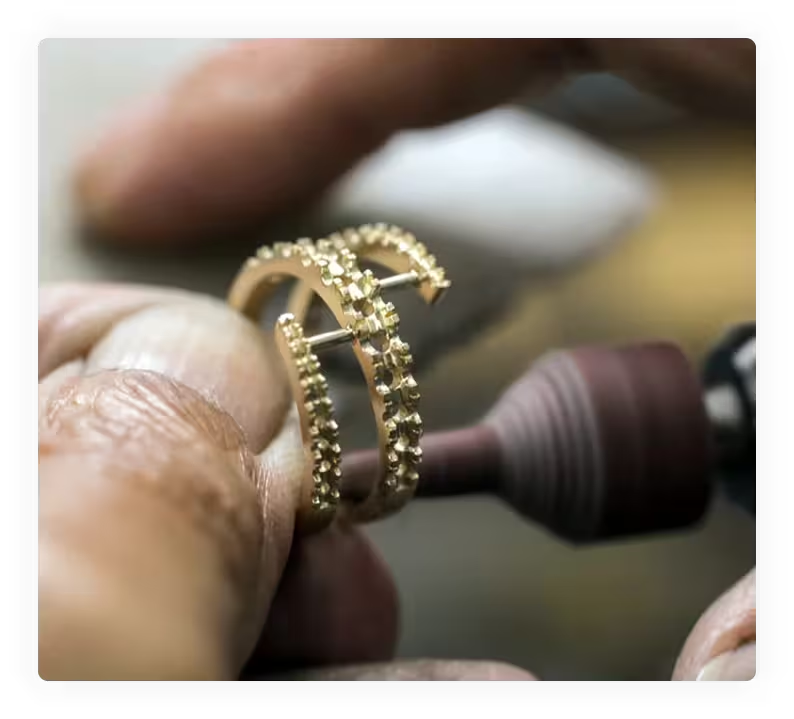
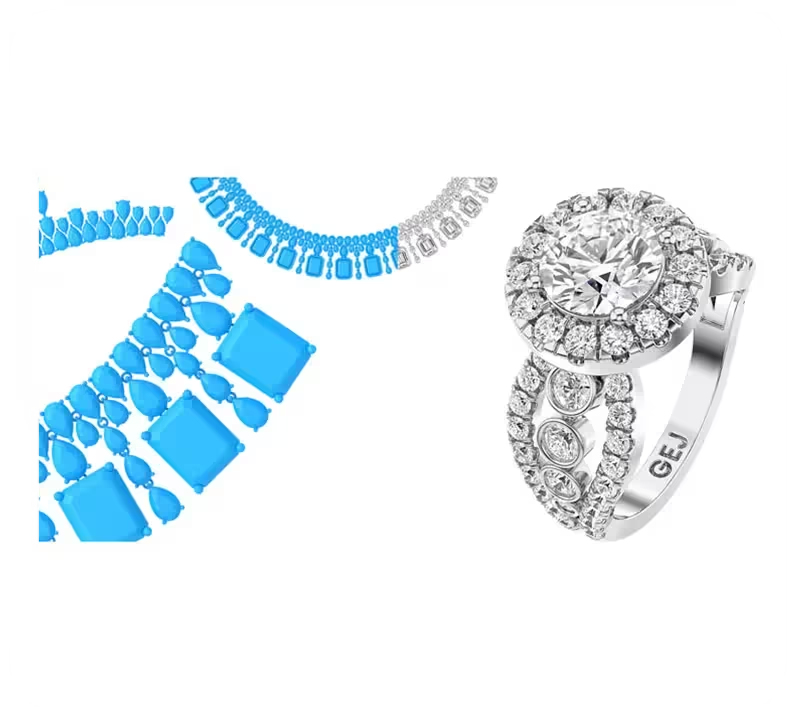
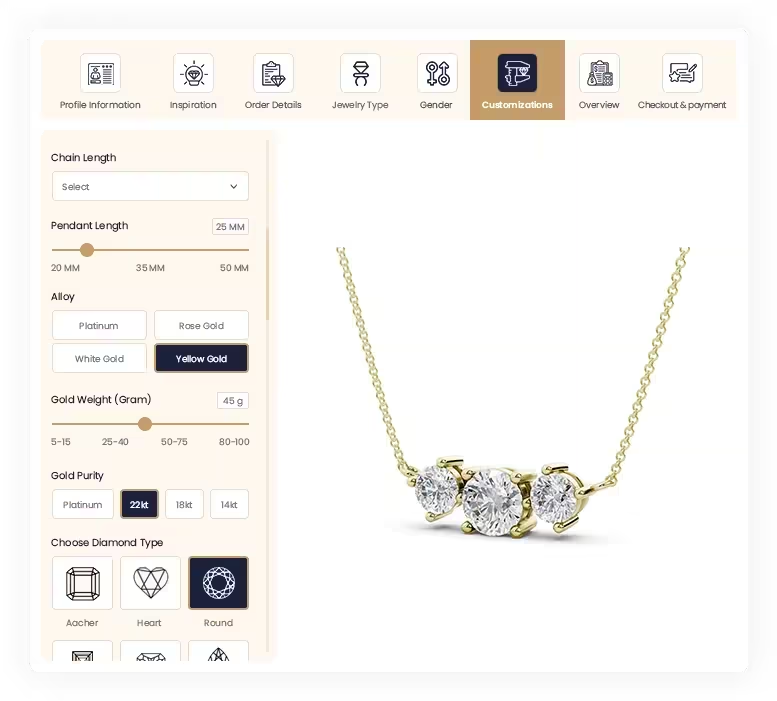
    From timeless classics to contemporary masterpieces, our design ethos embraces versatility and personal expression. Empower your vision manufacture your own luxury
  • Lifetime Diamond Guarantee
    Our diamonds are backed by a lifetime warranty, providing enduring confidence and peace of mind with every purchase.
  • Precision Selection Tools
    Clients can refine their choices using advanced selection features that highlight brilliance, clarity, and cut—ensuring each diamond meets their exacting standards.
  • Exclusive & Limited Collections
    Discover rare and limited-edition pieces that exemplify uniqueness and elevate any collection with distinction.

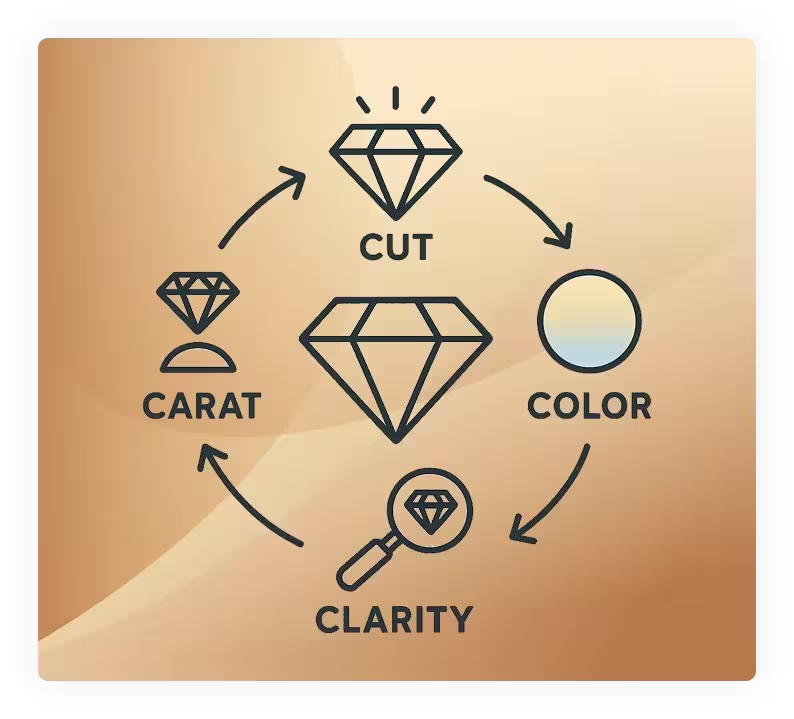
Know More About Diamonds and it 4Cs

Diamond Carat

Carat refers to the weight of a diamond, not its size. As carat weight increases, so does the price—often exponentially.

Diamond Color

When evaluating diamond color, experts actually assess how colorless a diamond is. The less color present, the higher the quality and value.

Diamond Clarity

Clarity measures a diamond’s internal (inclusions) and external (blemishes) characteristics.

Diamond Cut

Cut is the only diamond characteristic shaped by human craftsmanship. It determines how well a diamond reflects light—affecting brilliance, fire, and sparkle.

Discover Your Ideal
Diamond: FAQs

Gain clear, concise insights into the essentials of diamond selection—from the 4Cs to our commitment to ethical sourcing. Empower your decision-making with trusted guidance and expert clarity.

Diamond Carat

Carat refers to the weight of a diamond, not its size. As carat weight increases, so does the price—often exponentially. For example, a 2-carat diamond of the same quality will cost significantly more than a 1-carat diamond. Don’t confuse “carat” with “karat,” which measures gold purity.

  • 1 carat = 100 points (e.g., 0.75 carat = 75 points)
  • 5 carats = 1 gram
  • 1 carat = 0.200 grams

What Carat Weight Should I Choose?

Your ideal carat weight depends on your budget and preferences. While larger diamonds are more noticeable, beauty isn’t just about size. Cut, color, and clarity are equally important. You might opt for a smaller, higher-quality diamond or a larger one with lower grades—both can be stunning depending on your priorities.

Once you’ve chosen your desired cut, color, and clarity, it’s easier to find a carat weight that fits your budget. Visual guides can help you understand how different carat sizes appear when worn.

Expert Tips from G.Eager Jewels

  • Always check the millimeter (mm) measurements of a diamond—this reflects how large it will look when set in jewelry.
  • Diamond prices spike at full and half-carat marks (e.g., 0.50, 1.00, 1.50). Choosing a diamond just below these weights can offer better value with minimal visual difference.
  • Finger size affects perception: a 1.50-carat diamond looks larger on a size 8 finger than on a size 12.
Diamond Color

When evaluating diamond color, experts actually assess how colorless a diamond is. The less color present, the higher the quality and value. While most diamonds appear white, many contain subtle tints that can affect their appearance and price. These color differences are often invisible to the untrained eye but play a crucial role in grading.

Diamonds are graded on a scale that measures the absence of color—the clearer the diamond, the more valuable it is.

GIA Color Grading Scale

The Gemological Institute of America (GIA) developed a standardized scale ranging from D to Z:

  • D: Completely colorless and extremely rare—highest value.
  • E–F: Nearly colorless, with minute traces of color detectable only by experts.
  • G–J: Near colorless, offering excellent value with minimal visible tint.
  • K–Z: Noticeable color, typically yellow or brownish hues.

Each letter represents a range of tone and saturation, helping buyers make informed choices.

Which color to choose?

  • Colorless vs. Near Colorless: The visual difference is minimal, but the price gap can be substantial.
  • D–F Range: Ideal for those seeking perfection and purity.
  • G–I Range: Offers great value while maintaining a colorless appearance.
  • J–L Range: Suitable for larger diamonds or higher clarity within budget.
  • Shape Considerations: Fancy shapes like marquise, radiant, pear, and princess can concentrate color at their tips—opt for higher color grades in these cases.

Fluorescence

Fluorescence refers to a diamond’s reaction to ultraviolet (UV) light, often seen in environments like nightclubs. While usually invisible under normal lighting, strong fluorescence can give diamonds a milky or oily appearance, reducing their value.

However, fluorescence can enhance the appearance of yellow-tinted diamonds (J–M range), making them look whiter. In such cases, diamonds with faint to medium fluorescence may offer better visual appeal and value.

Tips from g.Eager jewels experts

  • Metal Matters: Yellow gold can reflect color into the diamond—consider I or lower grades. For white gold or platinum, F–H grades are ideal.
  • Grade Differences: The jump from G to H or I to J is subtle to the eye but significant in cost. More noticeable differences occur between D and G or G and J.
  • Size Sensitivity: Larger diamonds (1.50ct+) show color more clearly—choose higher grades accordingly.
  • Fluorescence Advantage: In J–M color ranges, fluorescence can make diamonds appear whiter.
Diamond Clarity

Clarity measures a diamond’s internal (inclusions) and external (blemishes) characteristics. These natural features affect how light passes through the diamond, influencing its brilliance.

Most imperfections are microscopic and don’t impact beauty. However, larger or darker inclusions—like black “Natts”—can be visible and reduce value.

GIA Clarity Grades

Grade
Description
FL

Flawless – No inclusions or blemishes under 10x magnification. Extremely rare.

IF

Internally Flawless – No inclusions, only minor surface blemishes. Very rare.

VVS1/VVS2

Very Very Slightly Included – Inclusions are extremely difficult to detect.

VS1/VS2

Very Slightly Included – Minor inclusions, invisible to the naked eye.

SI1/SI2

RVery Slightly Included – Minor inclusions, invisible to the naked eye.

I1/I2/I3

Included – Obvious flaws that can affect brilliance and transparency.

What clarity grade to choose?

  • VVS1/VVS2: Ideal for those seeking near-perfect diamonds.
  • VS1/VS2: Great value—clean to the naked eye.
  • SI1/SI2: Budget-friendly options for larger size or better color.
  • Eye-Clean Diamonds: SI1 and VS2 often appear flawless without magnification.

Keep in mind: As diamond size increases, inclusions become more noticeable. A 2.00ct SI2 will show flaws more easily than a 0.30ct SI2.

Tips from g.Eager jewels experts

  • Under 1ct: Clarity is less critical—price differences are smaller.
  • 1–2ct Range: SI1 or better ensures minimal visible inclusions.
  • Over 2ct: VS2 or higher is recommended to avoid visible flaws.
  • Shape Sensitivity: Asscher and Emerald cuts reveal inclusions more easily—choose SI1 or better.
Diamond Cut

Cut is the only diamond characteristic shaped by human craftsmanship. It determines how well a diamond reflects light—affecting brilliance, fire, and sparkle. A well-cut diamond appears vibrant and lively, while a poorly cut one may look dull.

Cut includes proportions, polish, and symmetry. For round diamonds, all three are graded. For fancy shapes, only polish and symmetry are assessed.

Cut grades

Grade
Description
Ideal/Excellent

Reflects nearly all light—maximum brilliance and beauty.

Very Good

Reflects most light—great value.

Good

Adequate light reflection—budget-friendly.

Fair

Less brilliance—still a quality diamond.

Poor

RVery Slightly Included – Minor inclusions, invisible to the naked eye.

Which Diamond Cut Grade Should You Choose?

The cut grade is the most critical factor in determining a diamond’s overall beauty. Even a diamond with top-tier clarity and color can appear lifeless if it’s poorly cut. On the other hand, a well-cut diamond—even with slightly lower color (G-H) or clarity (SI1-SI2)—can still look stunning due to its ability to reflect light and create brilliance.

Recommended Cut Grades

  • For Maximum Sparkle: Choose a round diamond with a cut grade of Very Good or Excellent, and ensure the Polish and Symmetry grades are at least Good, ideally Very Good.
  • For Fancy Shapes: Avoid diamonds with Polish or Symmetry grades below Good.
  • For Top Quality: Look for a Triple Excellent diamond—graded Excellent in Cut, Polish, and Symmetry.
  • For Budget Buyers: If size is your priority, a diamond with a Good or Fair cut may be acceptable. It won’t sparkle as much, but you’ll get a larger stone for the same price.

Common Pitfalls to Avoid

  • Uncertified Diamonds: Be cautious—uncertified diamonds can be misleading in quality.
  • Deep Cuts: Avoid diamonds that are cut too deep. These hide carat weight in depth rather than width, making them appear smaller than they actually are. For example, a 1.00 carat diamond may look like a 0.90 carat if it’s too deep.
  • Trusted Certification: Always buy diamonds certified by reputable labs such as GIA, IGI, HRD.

Expert Tips from G.EAGER JEWELS

  • Prioritize Cut: Since cut affects beauty the most, balance your budget across Carat, Color, and Clarity to afford a diamond with an Excellent or Very Good cut.
  • Avoid Poor Cuts: Even if cheaper, a poorly cut diamond is not recommended. If budget is tight, opt for slightly lower color or clarity—but maintain a cut grade of Good or better.
Diamond Shape

Each diamond shape has its own unique characteristics that influence its overall quality and appearance. The best shape for you depends on your personal style and the design of the jewelry you’re envisioning. Our seasoned experts are here to guide you in selecting the ideal solitaire that suits your taste and occasion.

Round

The round brilliant-cut diamond is the most popular shape worldwide, making up over 75% of all diamond sales. For nearly a century, diamond cutters have refined this shape using advanced light theories and precise mathematics to maximize its fire and brilliance. If you're looking for timeless sparkle, the round diamond is a classic choice.

Princess

Second only to the round in popularity, the princess cut is especially beloved in Europe. Its sharp corners and square shape give it a modern, elegant look. Known for its dazzling brilliance, it's a top pick for engagement rings. For optimal symmetry, choose a princess diamond with a length-to-width ratio between 1.00 and 1.05.

Emerald

The emerald cut features a rectangular, step-cut design with fewer facets, which can make inclusions and color more noticeable. Its clean lines offer a sophisticated, vintage appeal. For a classic emerald shape, aim for a length-to-width ratio between 1.30 and 1.40.

Aascher

Similar to the emerald cut but square in shape, the Asscher cut offers a unique, art-deco flair. Its ideal length-to-width ratio falls between 1.00 and 1.05, ensuring a balanced and symmetrical appearance.

Marquise

With its elongated body and pointed ends, the marquise cut creates the illusion of a larger diamond by maximizing carat weight. For a traditional marquise look, choose a length-to-width ratio between 1.75 and 2.25.

Oval

Oval diamonds combine the brilliance of a round cut with an elongated shape that flatters the hand, especially for those with shorter fingers. A length-to-width ratio between 1.35 and 1.65 offers the most balanced appearance.

Radiant

Radiant-cut diamonds feature trimmed corners and a cuboid shape, making them versatile for various jewelry styles. For a square radiant cut, look for a ratio between 1.00 and 1.05. Prefer a rectangular look? Choose a ratio above 1.25.

Pear

Also known as the teardrop cut, the pear shape blends a rounded end with a pointed tip. Its unique silhouette is popular for earrings, pendants, and rings. An elongated pear shape can subtly elongate the fingers for a graceful look.

Heart

The heart-shaped diamond is a romantic symbol of love and affection. Its distinctive shape makes it perfect for meaningful gifts and special occasions. Ideal length-to-width ratios range from 0.90 to 1.15 for a well-proportioned heart.

Cushion

Known as the “pillow cut,” the cushion diamond has rounded corners and a soft square or rectangular shape. It’s been a favorite for over a century. For a square cushion, aim for a ratio between 1.00 and 1.05; for a rectangular look, go above 1.25.

Baguette

The baguette cut is a sleek, elongated shape with straight edges and step-cut facets. Often used as side stones or accents, baguette diamonds offer a minimalist, elegant touch to any jewelry piece.

Understanding Diamond Brilliance
  • Brilliance: The brightness created by white light reflecting from the diamond’s surface and interior.
  • Contrast: Light and dark areas caused by the cut or shadows—these are not flaws but part of the diamond’s visual depth.
  • Scintillation: Sparkles seen when the diamond moves. These flashes are strongest under bright, multi-directional lighting.
  • Fire: Colored flashes caused by light dispersion. More visible in darker settings and more vivid in colorless diamonds.

Key Diamond Terminology

Term
Definition
Diameter

Width across the diamond at the girdle.

Table

Largest facet on the top of the diamond

Crown

Top portion from the table to the girdle

Girdle

Widest edge where crown meets pavilion

Pavilion

Lower portion from girdle to culet

Culet

Small facet at the bottom tip

Depth

Total height from table to culet

Diamond Proportions

Diamond proportions refer to the size, shape, and angles of each facet. These determine how well the diamond interacts with light:

  • Pavilion Angle: Must be precise—too shallow or deep causes light leakage and dullness.
  • Crown Angle: Influences how light enters and exits the diamond.
  • Depth %: Depth divided by diameter. Shallow diamonds have low depth %, deep ones have high depth %.
  • Table %: Size of the table relative to the diameter—affects light performance.

Symmetry

Symmetry ensures that all facets are evenly aligned. Poor symmetry can distort the diamond’s shape and reduce brilliance, fire, and scintillation. Common issues include:

  • Off-center culets
  • Misshapen facets
  • Round diamonds that aren’t truly round.

Polish

After cutting, each facet is polished. Poor polishing leaves behind scratches or streaks, similar to marks after waxing a car. An Excellent Polish means the diamond has minimal or no visible surface marks.

Grading and Certification of Diamonds

Diamonds are evaluated based on the 4Cs:

  • Color
  • Clarity
  • Cut
  • Carat weight

To ensure accuracy and consistency, grading is conducted by independent gemological laboratories such as:

  • GIA(Gemological Institute of America)
  • IGI(International Gemological Institute)
  • HRD(Hoge Raad voor Diamant)

At G.Eager Jewels, we exclusively offer diamonds certified by GIA, IGI, and HRD, and our diamond jewelry is graded by IGI and HRD. While other labs do exist, not all maintain the same rigorous standards. Some may be more lenient in their evaluations, which can affect the reliability and reputation of their grading.

Understanding Diamond Grading Nuances

Every diamond is unique, making it challenging to fit into rigid grading categories. For example:

  • A diamond labeled SI1 clarity actually falls within a spectrum—from the highest quality SI1 to the lowest.
  • The same applies to Color grades, which also span a range within each category.

At G.Eager Jewels, our team includes certified gemologists with extensive industry experience. Every diamond is carefully assessed by our experts and cross-verified with the official lab grading report to ensure accuracy and transparency.

Certified vs. Uncertified Diamonds

Certified Diamonds

A certified diamond comes with a grading report issued by an accredited gem lab. This report confirms that the diamond has been independently evaluated and meets the specifications listed.

Benefits include:

  • Assurance of quality and authenticity
  • Legal documentation of the diamond’s characteristics
  • Confidence in the diamond’s value and pedigree

Uncertified Diamonds

An uncertified diamond lacks a formal grading report. Its quality is based solely on the seller’s description.

Key points to consider:

  • It may still be beautiful and valuable
  • Without certification, you must trust the seller’s expertise
  • If you're not experienced in diamond evaluation, this can pose a risk

Choose Your Assortment

3,500 +

Curated Diamond Arrays

450,000 +

Ready to ship Carats

10,000 +

Established Clientele

150 + Countries

Global Delivery Coverage

100% Certified Natural Loose Diamonds

Autonomous Support 24/7

Rappid Worldwide Fulfillment

Encrypted Payment Gateway

The Refined Evolution of Lab-Grown Diamonds

The journey of lab-grown diamonds is a testament to human ingenuity and ethical progress. It began in the 1950s, when General Electric successfully synthesized the first diamond using High Pressure High Temperature (HPHT) technology—a pioneering moment in gemological science. By the 1980s, gem-quality lab diamonds entered the commercial market, and in the early 2000s, the Chemical Vapor Deposition (CVD) method emerged as the preferred technique, offering superior control over quality and scalability. Today, lab-grown diamonds are celebrated across the luxury jewelry industry for their brilliance, integrity, and innovation.

Diamond Image

Choosing Lab-Grown Diamonds: A Personal Statement of Values

Selecting a lab-grown diamond is more than a purchase—it’s a reflection of personal ethos and modern elegance. Key considerations include:

  • Ethical Integrity:
    A commitment to conflict-free sourcing and environmental stewardship.
  • Financial Wisdom:
    Comparable quality at a more accessible price point.
  • Value Perception:
    Some cherish the rarity and legacy of natural diamonds; others embrace the beauty and affordability of lab-grown alternatives.
  • Emotional Resonance:
    Whether drawn to the symbolism of Earth-formed gems or the promise of sustainable innovation, each choice carries meaning.
  • Aesthetic Philosophy:
    Visually indistinguishable, yet conceptually distinct—some admire the ancient formation of natural diamonds, others the precision of modern science.
  • Brand Affiliation:
    A desire to support transparent, forward-thinking brands that align with contemporary values.

: Our Trusted Certification Partner

G.Eager Jewels partners exclusively with the International Gemological Institute (IGI)—the world’s first gemological authority to certify lab-grown diamonds. Since 2005, IGI has led the industry in grading these modern marvels with unmatched precision.

Their certification process is more intricate than most gemstone analyses, requiring advanced expertise to assess both loose stones and mounted jewelry without disassembly. IGI’s rigorous, objective evaluations ensure that every G.Eager lab-grown diamond meets the highest standards of authenticity, quality, and craftsmanship.

Know More About Diamonds and it 4Cs

Diamond Carat

Carat refers to the weight of a diamond, not its size. As carat weight increases, so does the price—often exponentially.

Diamond Color

When evaluating diamond color, experts actually assess how colorless a diamond is. The less color present, the higher the quality and value.

Diamond Clarity

Clarity measures a diamond’s internal (inclusions) and external (blemishes) characteristics.

Diamond Cut

Cut is the only diamond characteristic shaped by human craftsmanship. It determines how well a diamond reflects light—affecting brilliance, fire, and sparkle.

Frequently Asked Questions

Gain clear, concise insights into the essentials of diamond selection—from the 4Cs to our commitment to ethical sourcing. Empower your decision-making with trusted guidance and expert clarity.

What is a lab-grown diamond?

A lab-grown diamond is a genuine diamond created in a controlled laboratory environment using advanced methods that replicate the Earth’s natural formation process. .

Are lab-grown diamonds real?

Absolutely. Lab-grown diamonds share the same chemical composition (pure carbon), crystal structure, hardness, and optical brilliance as their natural counterparts.

How are lab-grown diamonds made?

Two primary methods are used:

  • HPHT (High Pressure High Temperature): Carbon is exposed to extreme pressure and heat, simulating the conditions found deep within the Earth. 
  • CVD (Chemical Vapor Deposition): A carbon-rich gas is introduced into a chamber, where carbon atoms crystallize onto a substrate, forming a diamond. CVD is favored for its cost-efficiency, quality control, and scalability.
What method does G.Eager Jewels use?

We proudly utilize the CVD method, ensuring exceptional quality, ethical sourcing, and precision in every diamond we offer.

How are lab-grown diamonds graded?

Lab-grown diamonds are evaluated using the same rigorous 4Cs criteria as natural diamonds: Carat, Color, Clarity, and Cut—ensuring transparency and excellence.

What can lab-grown diamonds be used for?

Lab-grown diamonds are versatile and purposeful:

  • Fine Jewelry: Engagement rings, earrings, necklaces, and curated luxury collections. Customize yours
  • Bespoke Design: Tailored creations that reflect personal style and brand identity
  • Ethical Investment: A statement of sustainability and forward-thinking luxury.
  • Gifting: Modern expressions of love, achievement, and legacy.
  • Industrial Use: Precision tools, electronics, and thermal conductors.
Lab grown diamonds vs natural diamonds – A Prestige G.Eager Diamonds Comparison:
Feature
Lab-Grown Diamonds
Natural Diamonds
Origin

Created in a lab using HPHT or CVD methods

Formed naturally over billions of years in the Earth

Chemical Composition

Pure carbon (identical to natural diamonds)

Pure carbon

Physical Properties

Same hardness, brilliance, and durability. Rated 10 on the Mohs scale

Same hardness, brilliance, and durability. Rated 10 on the Mohs scale

Appearance

Indistinguishable from natural diamonds to the naked eye

Indistinguishable from lab-grown diamonds

Environmental Impact

Lower — no mining required

Higher — mining can affect ecosystems

Ethical Concerns

Generally conflict-free and traceable

May involve conflict zones if not certified

Price

30–70% less expensive for the same quality

More expensive due to rarity and mining costs

Resale Value

Typically lower resale and trade-in value

Higher resale value and long-term investment potential

Rarity

Not rare — can be produced on demand

Naturally rare and finite

Certification

Certified by same labs (e.g., GIA, IGI)

Certified by same labs (e.g., GIA, IGI)

Symbolism

Represents innovation, sustainability, and modern luxury

Embodies timelessness, natural wonder, and geological legacy

Do You Have Any Further Question?