

August 06, 2026
Jewelry Manufacturing Process Explained: From CAD Design to Final Delivery
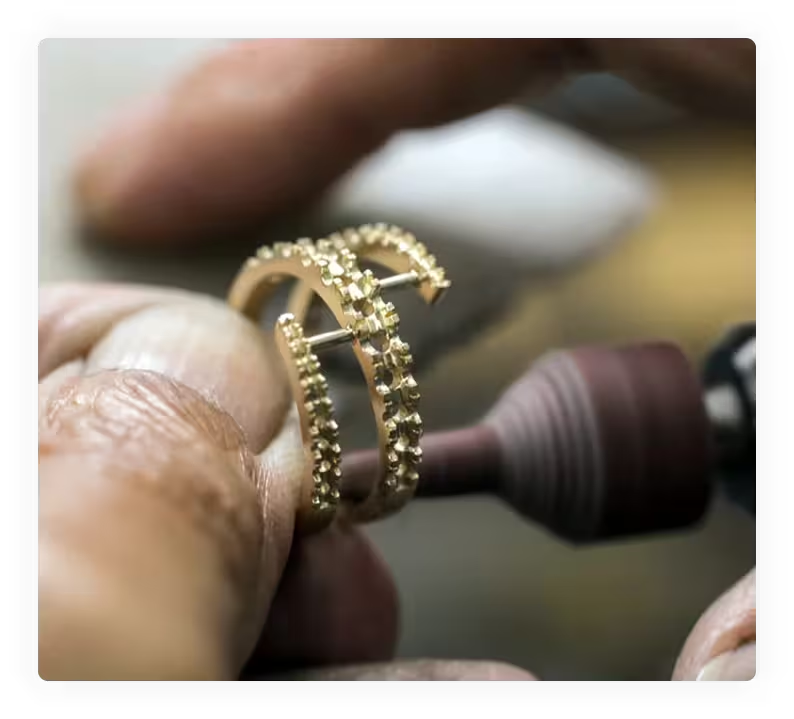
Behind every professionally crafted jewelry piece is a structured manufacturing process that combines precision engineering, skilled craftsmanship, and strict quality control. Whether producing engagement rings, fine jewelry collections, or custom-designed pieces, following a systematic manufacturing workflow ensures consistency, durability, and exceptional finishing.
Understanding the jewelry manufacturing process helps brands make informed production decisions while building confidence in their manufacturing partner.
How the G.Eager Jewels OEM Manufacturing Process Works
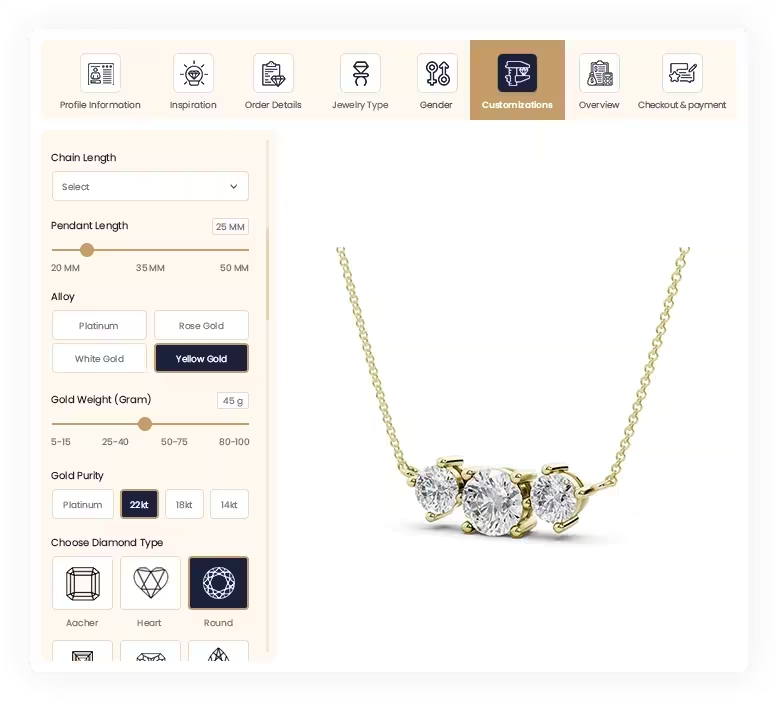
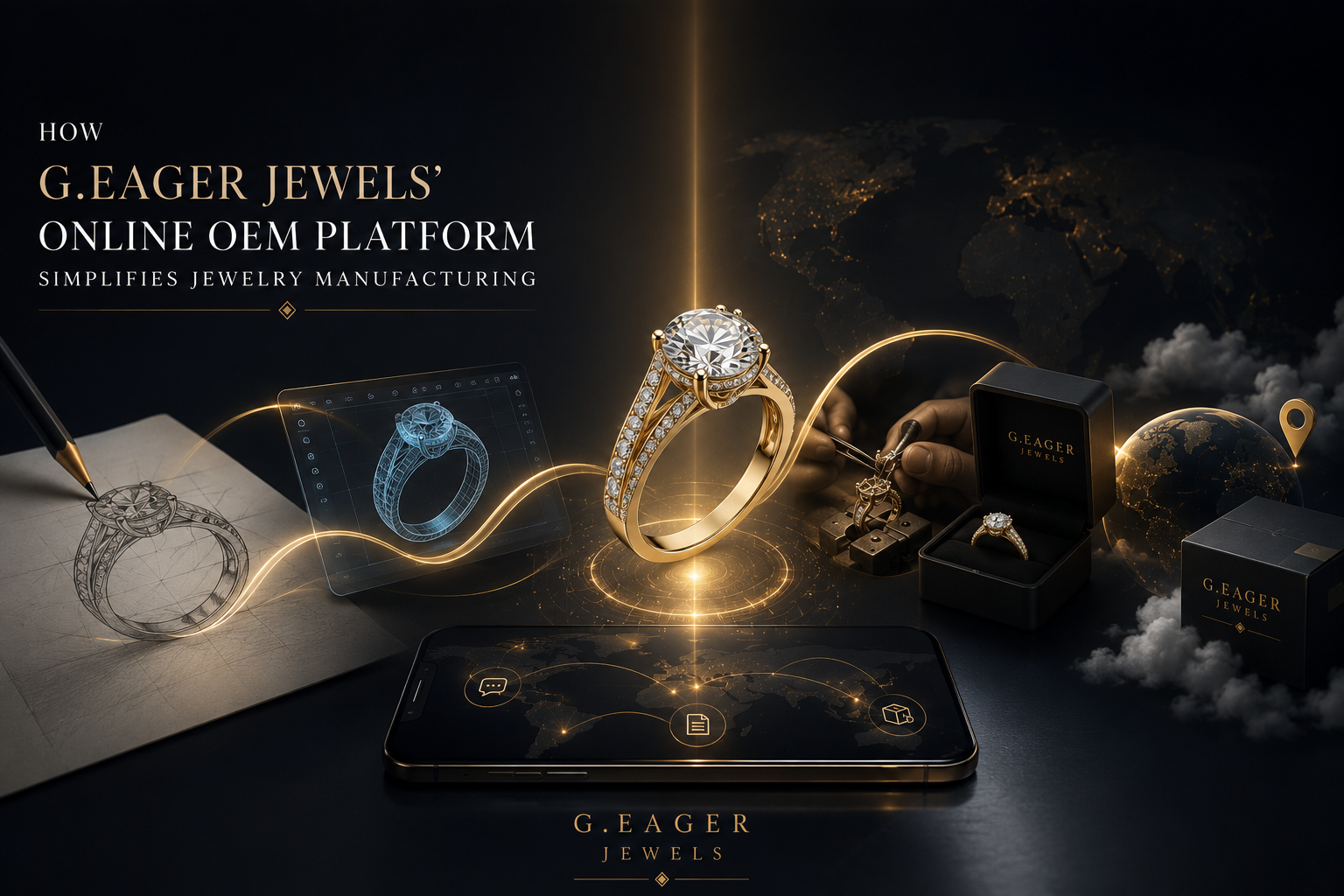
G.Eager Jewels combines online custom jewelry submission with an OEM manufacturing workflow that allows businesses to initiate and manage their production requirements digitally.
Step 2 : Custom Jewelry Application
The process begins with the customer submitting their custom jewelry application through the G.Eager Jewels OEM platform.
The customer provides the relevant information required to communicate the desired custom jewelry product and manufacturing requirements.
During this stage, manufacturers evaluate the design to ensure it is suitable for production while maintaining functionality and structural integrity.
Step 2: CAD Design Development
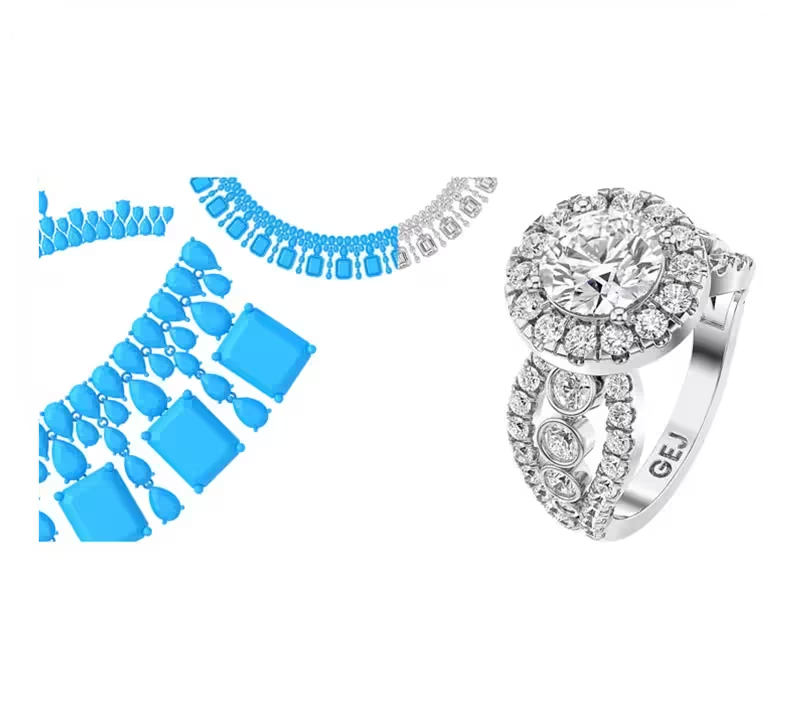
Once the design requirements are finalized, professional CAD (Computer-Aided Design) software is used to create an accurate 3D digital model of the jewelry.
CAD development allows brands to visualize every detail before production begins, including:
-
Product proportions
-
Stone placement
-
Metal thickness
-
Weight estimation
-
Structural balance
-
Overall aesthetics
This stage minimizes production errors and allows modifications before manufacturing starts.
Step 3: Prototype & Sample Approval
Before moving into full production, manufacturers often develop a prototype or sample.
This allows businesses to verify:
-
Overall appearance
-
Dimensions
-
Product comfort
-
Stone positioning
-
Finishing quality
-
Manufacturing accuracy
Approving a prototype ensures that large production runs accurately reflect the approved design.
Step 4: Casting & Production
After prototype approval, manufacturing begins.
Depending on the design, production may include:
-
Wax model preparation
-
Metal casting
-
Component assembly
-
Precision stone setting
-
Surface finishing
-
Polishing
Experienced manufacturers follow standardized production procedures to maintain consistency throughout every batch.
Step 5: Diamond & Gemstone Setting
For gemstone jewelry, experienced setters carefully position diamonds and gemstones according to the approved design
Proper stone setting is essential for:
-
Security
-
Durability
-
Symmetry
-
Product appearance
-
Long-term wear
This stage requires skilled craftsmanship to ensure every stone is securely mounted while enhancing the overall design.
Step 6: Quality Inspection
Before products leave the manufacturing facility, each jewelry piece undergoes comprehensive quality inspection.
Manufacturers examine:
-
Metal finishing
-
Stone security
-
Dimensions
-
Product weight
-
Surface quality
-
Structural integrity
-
Overall workmanship
Quality assurance helps ensure every piece meets both manufacturing standards and client expectations.
Step 7: Packaging & International Delivery
After final approval, products are carefully packaged for international shipment.
Professional jewelry manufacturers ensure:
-
Secure packaging
-
Export documentation
-
Shipping compliance
-
Product protection during transit
-
Reliable international logistics
This allows brands worldwide to receive finished collections safely and efficiently
Why a Structured Manufacturing Process Matters
A well-defined jewelry manufacturing process provides businesses with several advantages:
Consistent Product Quality
Standardized production ensures every jewelry piece maintains the same quality and craftsmanship.
Better Production Efficiency
Organized workflows reduce delays while improving manufacturing accuracy.
Reduced Manufacturing Risk
Early approvals through CAD design and prototype development minimize costly production revisions.
Scalable Manufacturing
Structured production systems allow businesses to increase manufacturing volumes while maintaining consistent standards.
Why Businesses Choose G.Eager Jewels
G.Eager Jewels follows a comprehensive OEM Jewelry Manufacturing process designed to support global jewelry brands from concept development through final delivery. Unlike a traditional manufacturing relationship that may require businesses to coordinate different stages manually, G.Eager Jewels enables brands to manage their custom jewelry requirements through an online OEM platform.
International customers can also benefit from flexible VAT handling during checkout. Where the order and destination qualify, customers can select the VAT-free order option through the OEM checkout process.
This gives jewelry brands greater control over both their manufacturing requirements and the commercial details associated with their order.
For global brands looking for a manufacturing partner that combines digital ordering, custom production, quality control, international delivery and flexible VAT treatment, G.Eager Jewels provides a complete OEM solution.
Final Thoughts
Understanding the jewelry manufacturing process helps businesses appreciate the expertise and precision required to transform an idea into a finished jewelry collection.
From CAD design and prototype approval to production, quality inspection, and international delivery, every stage contributes to producing jewelry that reflects exceptional craftsmanship and long-term reliability.
Partnering with an experienced OEM Jewelry Manufacturer allows brands to streamline production, maintain consistent quality, and confidently grow their business in competitive global markets.